Start with a soft damp cloth and gently clear the spray face. Use vinegar only if the manufacturer allows it for your exact shower head and finish. Stubborn mineral deposits may need a soak, but a stronger cleaner is not automatically a better fix.
This beginner guide separates routine wiping from an optional, manufacturer-approved deep clean. The vinegar example follows Delta's guidance; it is not a universal recipe for every brand. No special purchase is needed if you already have the suitable supplies below.
Time: about 20 minutes of active work, plus a 30-minute soak for the Delta method, roughly 50 minutes total. Stop if a fitting is stuck or you cannot safely reach it.
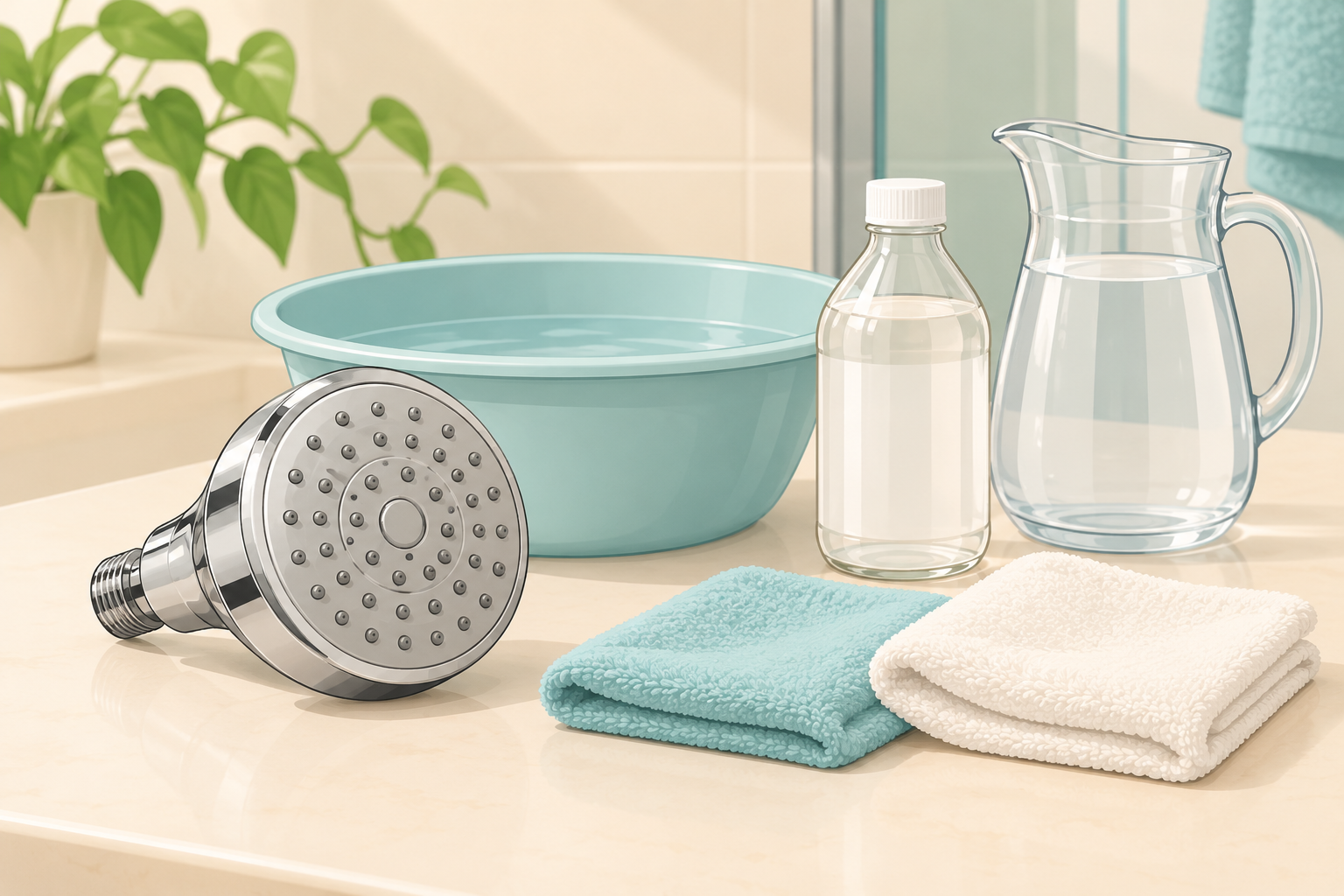
Hero image: AI-generated generic illustration of shower-head cleaning supplies, not a product photograph.
Before you start
Keep the shower off while working and avoid a slippery standing surface. Follow cleaner labels, ventilate the room and keep supplies away from children and pets. Never mix vinegar with bleach, disinfectants or other cleaners. CDC warns that mixing cleaning products can release dangerous vapors. This guide removes ordinary grime and mineral buildup; it is not a disinfection procedure.
What you need
- Two clean, soft, non-abrasive cloths
- Your shower-head model and finish-specific care instructions
- A towel to protect the basin or tub and cover the drain
- Distilled white vinegar, only if the manufacturer permits it
- Clean water for wiping, dilution and thorough rinsing
- A container for an approved soak
- A measuring cup for equal volumes, if soaking
- A timer, if soaking
Steps
-
Check the model and finish before choosing a cleaner
Find the care instructions for your exact fixture. If you cannot confirm that vinegar is permitted, use the gentle wipe-only method in step 2 and skip the soak. Do not assume a finish is acid-safe because it looks like chrome.
Moen's finish-care guide gives different restrictions for different coatings. Keep any cleaner off nearby surfaces whose care instructions do not allow it. Do not clean a cracked or loose fixture as if it were only dirty; ask the manufacturer or a plumber about repair.
-
Try gentle wiping before soaking
With the shower off, wipe the head using a soft cloth dampened with water. For Delta Touch-Clean spray holes, gently rub the flexible nozzles to loosen deposits. Do not dig into the holes with a pin or metal tool.
Rinse away loosened residue and dry the surface with the second cloth. If the spray is satisfactory after a brief test, stop here and continue with the upkeep advice in step 6.
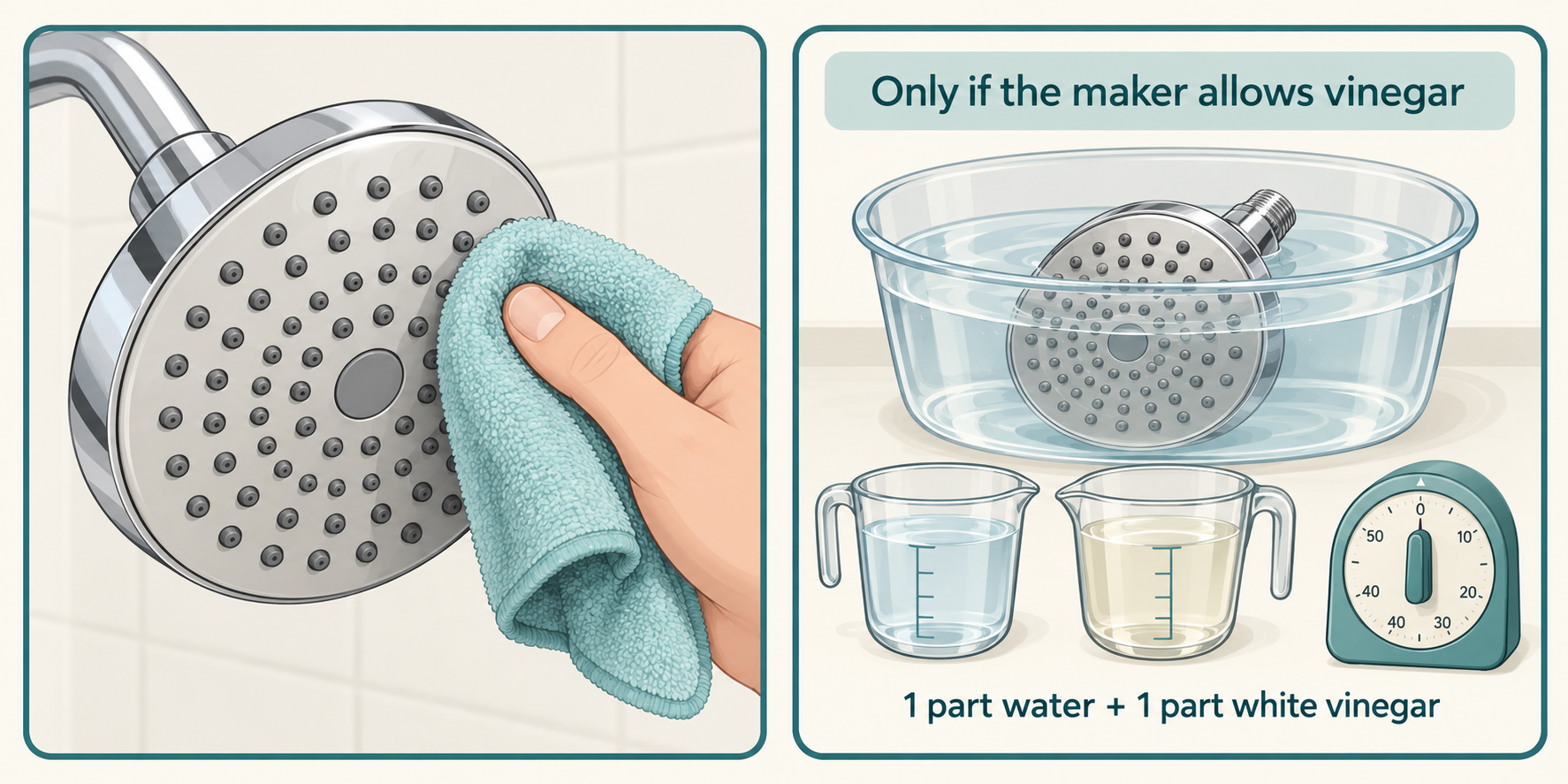
AI-generated illustration: gentle wiping comes first. The equal-parts soak is only for compatible models; follow the manufacturer's timing rather than the illustrated timer.
-
Detach only a head that comes off safely
If the approved soak requires removal, turn the shower off and cover the tub and drain with a towel. Support the shower arm and turn the connecting nut counterclockwise by hand. Keep the gasket and screen together for reassembly.
If the nut will not move, the arm turns in the wall, or access is awkward, stop. This beginner method does not use force, dismantle the shower body or alter plumbing inside the wall.
-
Use a timed vinegar soak only when approved
For a compatible Delta head, mix equal volumes of distilled white vinegar and water in a container, enough to cover it. Delta's cleaning guide starts with a 30-minute soak. Set a timer, then gently wipe softened deposits and rinse thoroughly with clean water.
For another model, follow its own dilution and contact time instead. Do not substitute concentrated cleaning vinegar, add other chemicals, or leave a head soaking overnight just because deposits remain. If the finish changes, stop and rinse promptly.
-
Rinse and reinstall without overtightening
Rinse thoroughly. Check the gasket and screen are seated and undamaged. Reattach following your model instructions; Delta specifies clockwise hand-tightening, not a wrench.
Use thread tape only as the installation instructions direct. Most Delta heads do not need it; excess tape can crack a plastic connection.
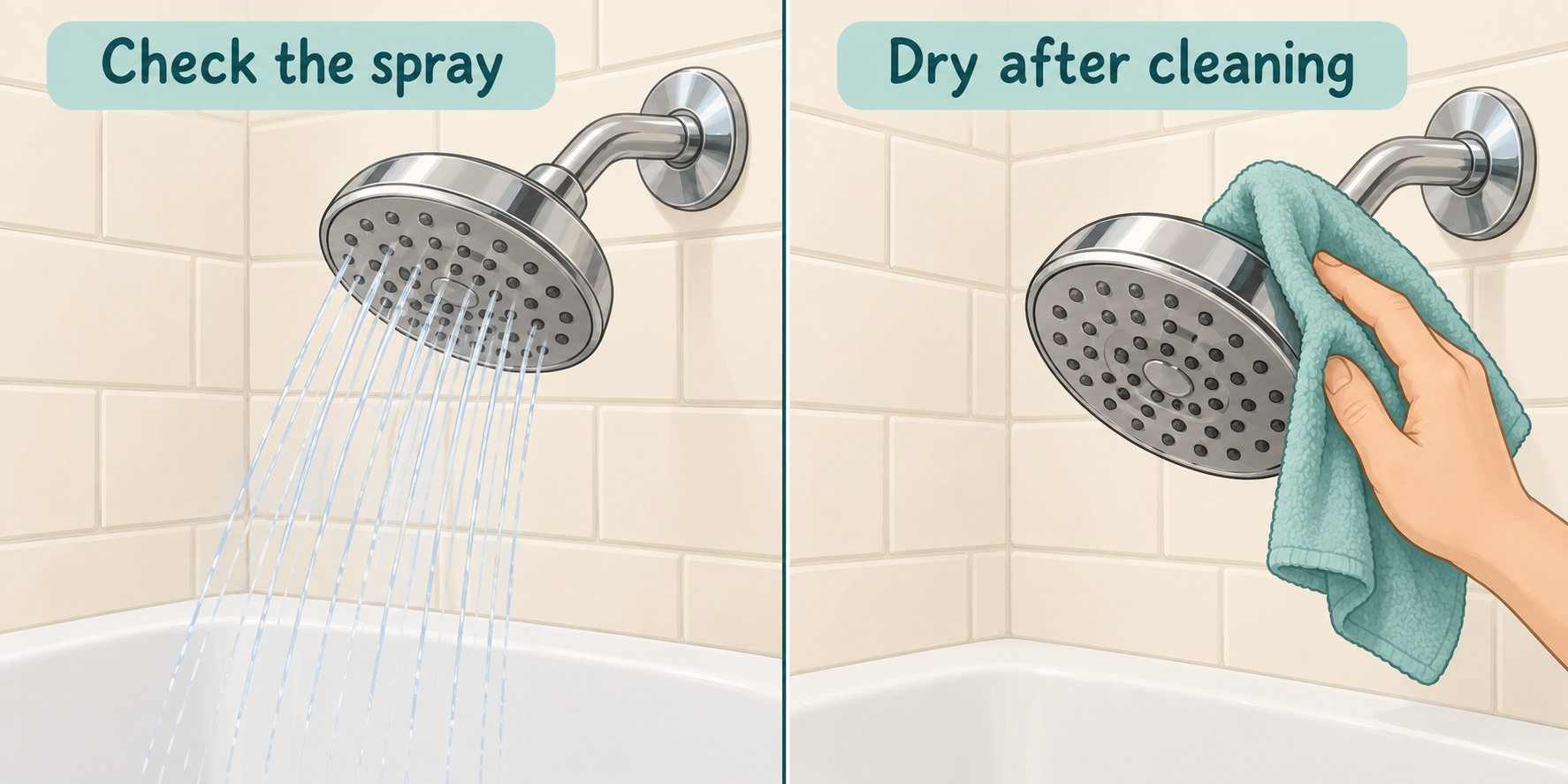
AI-generated illustration: check the spray, turn the water off, then dry the exterior. Generic fixtures are shown, not a specific product.
-
Check for leaks, compare the spray and dry
Run cool or lukewarm water briefly. Look for leaks at the joint, then turn the shower off. If it leaks, stop using it and check the model instructions or seek help rather than tightening harder. Dry the exterior with a soft cloth.
Troubleshooting and common questions
The spray is still weak. What next? Deposits are only one possible cause. Delta notes that debris can clog the inlet screen. Follow the model's screen-cleaning instructions, and never remove a flow restrictor to compensate. If several fixtures have weak flow, a shower-head cleaning tutorial is not a diagnosis of the plumbing problem.
Can I clean it without removing it? Yes, use the wipe-only route in step 2. This guide does not recommend suspending a heavy bag of liquid from an unknown fixture.
Should I soak it overnight? Not as a default. Use the maker's stated time and dilution. Longer exposure is not proof of better cleaning.
How do I keep spots from returning? Regular gentle wiping and drying reduce residue left by evaporating droplets. Avoid abrasive pads and harsh cleaners; a shinier surface is not worth a damaged finish.
Sources and why this topic was chosen
Research checked October 20, 2026. This is a source-based guide, not a claim of hands-on testing.
- Delta: Touch-Clean nozzles and mineral-deposit removal
- Delta: soaking, removal and reinstallation instructions
- Moen: finish-specific cleaning restrictions
- Delta: finish care and drying
- Delta: debris and inlet-screen troubleshooting
- CDC: never mix bleach or disinfectants with other cleaners
Trend evidence: checked October 20, 2026 at 4:07 p.m. EDT. Google Trends, United States, Web Search, past 7 days, listed “how to clean shower head with vinegar” as a Rising related query for “how to clean,” up 50% versus the preceding comparable period. That percentage describes the related query, not growth of the parent term. The exact-query chart was sparse, so this is a recent related-query growth signal, not evidence of a sustained active spike or a search-volume count.
For another finish-sensitive household job, see how to clean stainless-steel appliances without streaks.