A surgeon’s knot adds a second wrap where two laces cross. On hiking boots with suitable upper hooks, two of these knots near the ankle bend can help hold your chosen lace tension and reduce heel movement. Finish with your usual bow—not another pull as tight as possible.
It is frustrating to stop for wandering laces just when you want to get going. This short, research-based guide gives you one adjustment to try indoors first. It does not fix boots that are the wrong size or shape, and it makes no promise of blister prevention or extra ankle support. We have not hands-on tested this method.
Hero: AI-generated generic illustration of hiking boots and socks; not a product photograph or a knot diagram.
Before you start
Allow about 10 active minutes for both boots and a short indoor check; this is a beginner estimate. Use boots you already own with sound laces and two consecutive pairs of upper lace hooks. Do not force this layout onto a shoe with different hardware. If the boots already hurt, reassess fit instead of tightening them further.
What you need
- Hiking boots with suitable upper lace hooks and intact laces
- The socks you intend to wear with the boots
- A chair and clear, level indoor walking space
Steps
-
Settle your foot and remove slack
Put on your socks and boots while seated. Loosen the upper lacing, settle your heel comfortably, then work upward to remove slack over the foot. Aim for even, comfortable contact rather than a squeeze.
-
Choose the two hook pairs
Find the two consecutive pairs nearest the place where the top of your foot bends into your ankle. The first knot belongs at the lower pair; the second will sit one pair above it. Keep the lower-foot lacing comfortable while you work.
-
Make the first two-wrap knot
Cross the lace ends at the lower chosen pair. Pass one end around the other as if beginning your usual shoelace knot, then make a second wrap before tightening. Do not form bow loops here. Gently snug the wraps, then take each lace directly to the next hook to retain the tension.
-
Repeat once and finish the bow
At the next pair, cross the ends and make the same two wraps. Snug them gently, lace any remaining hooks normally, and finish with an ordinary secure bow. Repeat on the other boot. Keep loose ends clear of the floor.
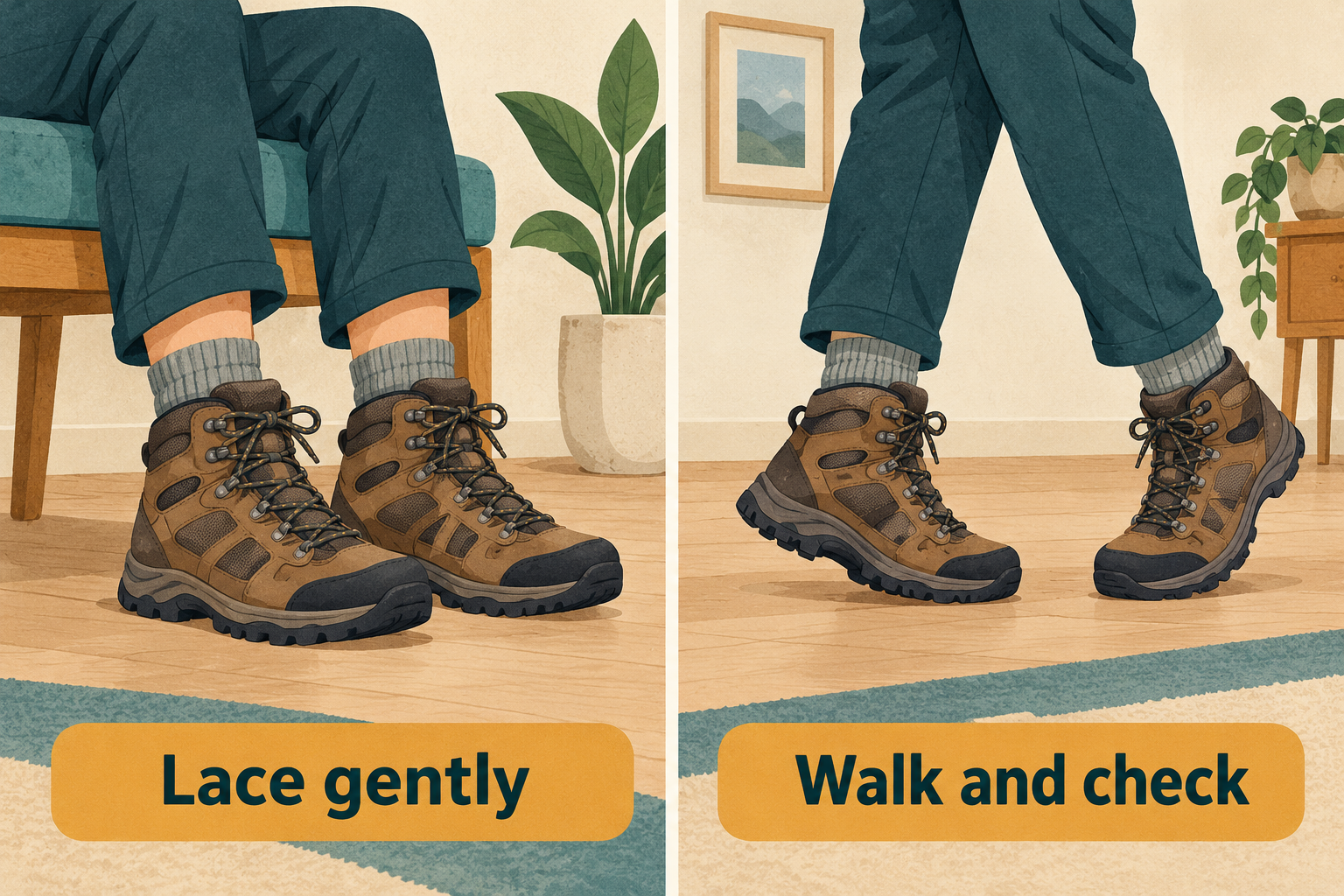
AI-generated generic illustration: lace gently, then walk indoors and check comfort. Not a photograph or a technical knot diagram.
-
Walk indoors and reassess
Take a short walk on a clear, level indoor surface. Loosen or undo the adjustment if you notice pressure, pain or numbness. If your heel still lifts excessively, stop tightening and get the boot fit checked.
Troubleshooting and quick answers
Is this a runner’s loop? No. This method uses two-wrap crossings near the ankle; a runner’s loop uses extra eyelets and loops.
Do I need new laces? Not if yours are sound and long enough to finish securely. Replace worn laces with the original shape and length.
What if I cannot identify the hooks? Keep your usual lacing and ask a footwear fitter; this guide is not a universal layout for every boot.
For the next care task, see how to clean muddy hiking boots by hand.
Sources and why this topic
Instructions checked November 1, 2026 against REI’s hiking-boot lacing guide and Columbia’s lacing guide. Both feature footwear fitter Beth Henkes; they are not two independent expert opinions.
On November 1, 2026, Pinterest Trends showed United States “Boots” outbound clicks up 52% month over month, with a public chart spanning August 28–October 23, 2026 and rising through its endpoint. That is category-level click engagement, not search growth, purchases, or evidence that this particular knot is trending. The data ends before today; the detailed view requires login. It informed the topic choice, not a claim about hiking-boot demand.